
Welcome to another FAB Research update.
Getting Evidence into Practice?
NEW PAPER on Lifestyle Psychiatry: a conceptual framework for application in mental healthcare and support
- From world leading international researchers, including Professor Joseph Firth, Professor Felice Jacka, Dr Scott Teasdale and others.
If you would like to help get more of the evidence for nutrition & dietary support, and other lifestyle approaches, actually put into practice - in mental health services, and allied areas:
- Please REGISTER your interest at FAB FOR THE NHS to get FREE Updates on what FAB is doing to help this happen
- If you work for the NHS or a UK University, we’d particularly love to hear from you - and to offer you FREE access to relevant FAB events
UK Educational Psychologists or Trainees – Please can you help?
LAST CALL: SURVEY CLOSES THIS FRIDAY (19th Dec)
One of our FAB Volunteers - based at the University of Bristol - is inviting UK-based Educational Psychologists (either fully qualified, or 2nd-3rd year trainees) to take part in a very short (15-min) online survey - exploring views around nutrition in relation to Educational Psychology practice. You do not need to be knowledgeable about nutrition to take part.
- Please follow this link to take part in the 15 minute survey for EPs:
And/or PLEASE SHARE with any Psychologists you know - or other networks - that might be able to further circulate this research.
Thank you in advance for your support of this unique and important work, and if you have any specific questions on this particular project,
News Updates
Mental Health and Wellbeing
Low Vitamin D Tied to Higher Depression Risk in Adults
A new systematic review confirms the link between vitamin D deficiency and depression - especially in winter months, when low levels are widespread in the UK and other countries at similar latitudes.
Previous clinical trials have already shown Vitamin D supplements can help reduce depressive symptoms in adults - but only at sufficient dosages.
Might ‘Keto’ hold potential for supporting mental health?
Evidence indicates a ketogenic diet may help reduce depressive symptoms, but anxiety evidence remains uncertain. Improvements in mood were most pronounced in adults following the diet for at least 12 weeks.
Low Glutamate Diet Slashes Migraines in Gulf War Veterans
Migraine incidence dropped from over 50% to under 20% after one month on a low glutamate diet, a new study has found – adding to other recent evidence that dietary changes can reduce pain and significantly improve quality of life.
How You Eat May Be Connected to How You Sleep
Blood glucose patterns, diabetes management, and the types of foods people eat were all found to be associated with sleep quality in US adults.
Diet And Brain Aging
Early Obesity and Low Choline Levels Linked to Future Memory Loss
Obesity and low choline in young adults are associated with biological markers of inflammation and liver stress, and indications of early brain aging, a new study reports.
Targeting Brain Immune Cells Could Restore Alzheimer’s Related Lipid Imbalance
Changes in brain fats, or lipids are known to play a major role in Alzheimer’s development and progression – but reducing ‘neuroinflammation’ could help.
Flavanols Boost Brain Activity, Memory, and Stress Response (in mice)
Compared with controls. flavanol-fed mice showed more motor activity, exploratory behaviour, and improved learning and memory.
Nutrition and Child Behaviour
Taking Prenatal Supplements Associated With 30% Lower Risk of Autism
Researchers say the evidence is strong enough to support incorporating folic acid and multivitamin supplementation into routines beginning before conception and continuing through early pregnancy.
Early Childhood Patterns of Picky Eating Can Ripple Through Development for Some
Avoidant or restrictive eating that persisted from age 3 to 8 years predicted greater developmental problems, including higher rates of autism, ADHD, and epilepsy.
Omega-3 Deficit Linked to ADHD Symptoms in Palestinian Adolescents
ADHD symptoms were also linked with socioeconomic disparities, which directly affected participants' omega-3 intake.
Food Industry in Focus
Ultra-Processed Food Consumption Driven by Commercial Interests, Not Individual Weakness
Ultra-processed foods are easily overeaten, owing to their higher energy density, tastiness, and soft textures – as the food industry knows
Are Ultra-Processed Foods the Subject of ‘Addiction’ for Some?
In some people, certain foods seem to lead to ‘addictive’ eating, consistent with substance-use disorders - but this still goes unrecognised under current medical classification systems.
The High Price of Cheap Food
What might look like a positive contribution to the UK economy may well turn out on closer inspection to be a massive false economy.
Mandatory Nutrition Labels Could Avert 100,000+ Obesity Related Deaths
Benefits were observed consistently across different socioeconomic groups, suggesting that labelling would be an equitable public health intervention.
Alcohol
Prenatal Alcohol Exposure Rewires Fuels Compulsive Behaviour
Even limited alcohol consumption during sensitive developmental windows can have profound and lifelong consequences.
Alcohol: Bad for Heart, Brain, and Cognition?
Alcohol linked to higher risks for hypertension, heart disease, stroke… several forms of cancer… and shortened lifespans.
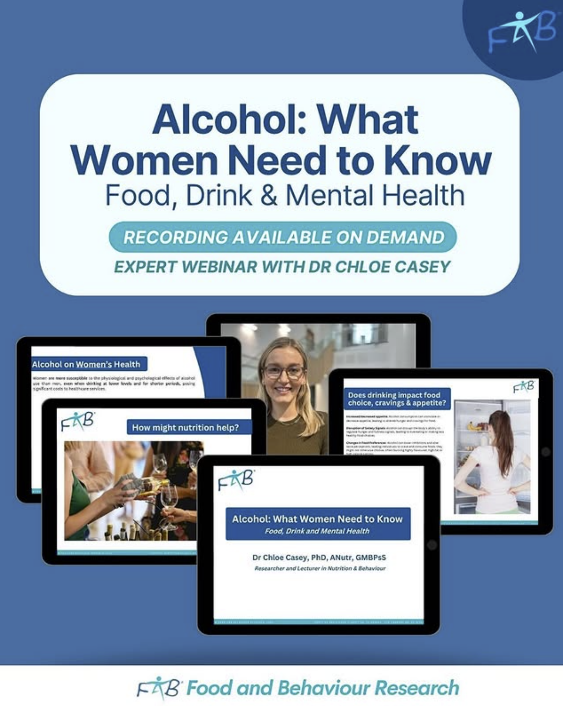
Alcohol: What Women Need to Know – A FAB Webinar with Dr Chloe Casey
Exploring women’s drinking, how alcohol uniquely harms women’s bodies and mental health, and how nutrition can help support recovery.
FAB FOR YOU...
One of the things that makes FAB Research unique is the wide range of different audiences we serve, and the many different disciplines and perspectives we include in our news and research updates.
If you’d like additional updates and resources tailored to your own particular interest(s) in the links between food and behaviour, please let us know by registering your specific interests here:
NHS professionals – and UK researchers and students
Teachers or Schools – and other Education professionals
Many thanks for your interest – and please share this email with friends or colleagues you think may be interested in finding out more about the many links between Food and Behaviour.
Best regards
The FAB Research Team